Mining Conveyor Belt Safety Inspection: Critical Hazards and Prevention Guide
Mining Conveyor Belt Safety Inspection: Critical Hazards and Prevention Guide
Mining conveyor belt systems are among the most heavily loaded and continuously operated equipment in any mine site. A single failure — whether from a seized conveyor belt roller, a torn belt, or a disabled protection device — can cascade into production stoppages, equipment damage, or serious safety incidents. Drawing on inspection findings from mining operations worldwide, this article organizes the most common conveyor belt hazards into eight actionable categories, helping maintenance teams and safety officers conduct systematic inspections and prioritize corrective actions.
Category 1: Safety Protection Devices
Protection devices are the first line of defense, and their failure represents the most frequently cited and highest-risk category of conveyor belt hazards.
Four Essential Protections: Every conveyor belt installation must have fully functional slip, misalignment, material pile-up, and longitudinal tear protection. When any of these four is missing, damaged, bypassed, or fails to trigger, the entire system operates without a safety net.
Emergency Stop Systems: Pull-cord emergency stops must be installed at intervals not exceeding 50 meters, securely fastened, and equipped with latching mechanisms. Underground section conveyors frequently lack adequate emergency stops along their full length — a gap that must be closed.
Temperature, Smoke, and Fire Suppression: Head-end temperature and smoke sensors are non-negotiable for mining conveyor belts. Automatic sprinkler or fire suppression systems must be present, pressurized, and free of clogged nozzles. A dry suppression system offers no protection.
Inclined Conveyor Protections: Any conveyor operating on a slope of 16 degrees or greater requires anti-reversal devices, braking systems, and overspeed protection. Missing or disabled slope protections are immediate safety risks.
Tension and Tear Monitoring: Main conveyor belts need tension-loss detection systems. Longitudinal tear protection — whether sensor-based or anti-tear mesh — must be installed and active. A torn steel wire conveyor belt left undetected can destroy thousands of meters of belting within minutes.
Monitoring and Interlocks: Head-end and transfer-point video monitoring should be operational. All electrical interlocks must be correctly wired and functional.
Category 2: Equipment Mechanical Integrity
Mechanical degradation accumulates silently until it triggers a failure. Regular inspection of the following areas prevents the majority of unplanned downtime:
Belt Misalignment: Frame distortion, damaged conveyor belt rollers, uneven pulley wear, off-square splices, eccentric loading, and material buildup under the return belt all cause tracking problems. Underground section conveyors exceeding 300 meters without automatic alignment correction devices are especially vulnerable.
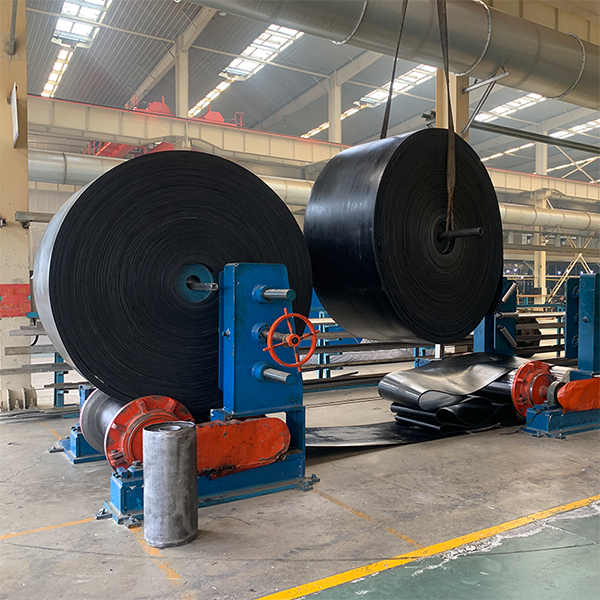
Belt Wear and Aging: Edge tearing, ply separation, blistering, and chunk loss signal that a belt has reached the end of its service life. Any belt with thickness worn beyond 20% of its original specification should be scheduled for replacement. Running belts past their rated life creates unpredictable failure risk.
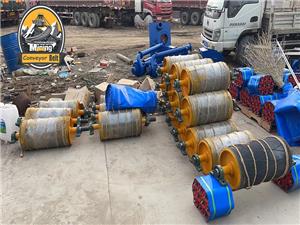
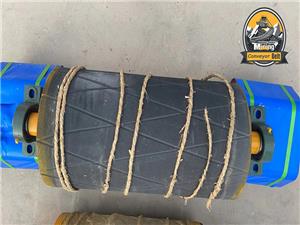
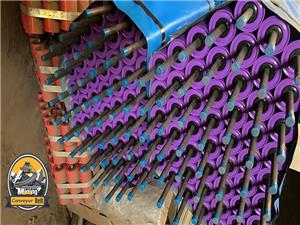
Conveyor Belt Roller and Pulley Issues: Missing, seized, or non-rotating idlers create asymmetric drag. Worn lagging on pulleys creates diameter differentials. Bearing failures, shaft migration, and loose mounting bolts are all early indicators that should trigger immediate maintenance. A single failed conveyor belt roller in a critical position can cause rapid belt edge damage.
Frame and Tail Section Integrity: Distorted or leaning frames with loose connection bolts compromise the entire alignment. Tail sections buried in spilled material, damaged buffer idlers, and sinking tail frames are common in high-throughput areas and require frequent attention.
Slippage and Overloading: Insufficient belt tension and inadequate drive pulley friction cause slippage that generates dangerous heat. Transfer-point blockages and material pile-ups place sudden overload on the system. Long-term operation beyond design capacity accelerates wear on every component.
Category 3: Fire Prevention and Dust Control
Underground mining environments combine three elements that make conveyor belt fires uniquely dangerous: enclosed spaces, combustible materials, and sustained airflow.
Firefighting Equipment: The area within 20 meters of the head end must be supported with non-combustible materials. Fire water lines must be charged, with valves accessible. Fire extinguishers must be within their inspection date and fire sand available. An expired extinguisher offers no protection when seconds count.
Dust Suppression: Transfer points without functioning water spray systems allow respirable coal dust to accumulate. Dust layers exceeding regulatory limits create explosion risk and degrade equipment. Roadway dust must be regularly washed down. Explosion barrier water troughs must be filled and undamaged.
Flame Retardant Conveyor Belt Compliance: Every conveyor belt entering an underground mining operation must have valid third-party flame retardant and anti-static certification. Using a non-certified belt is among the most serious safety violations and places the entire operation at risk. Flame retardant conveyor belts are designed to resist ignition and prevent flame propagation — a critical safety property that must never be compromised.
Category 4: Electrical Safety
Electrical hazards carry zero tolerance in mining environments. Key inspection points include:
Motor, switch, and junction box integrity — missing bolts, substandard seals, loose wiring, and damaged cable sheathing are all unacceptable
Cable routing that avoids dragging, submersion, burial, or compression; all joints must meet approved standards
Properly calibrated leakage, overcurrent, and grounding protection — bypassed or miscalibrated protections are a direct safety threat
Equipment, frame, and cable grounding with resistance below 4 ohms
Switch and control box labeling, protection, and clean internal wiring
Category 5: Site Management and Clearances
Poor housekeeping is a leading contributor to preventable conveyor incidents:
Safety Clearances: The gap between the conveyor frame and the tunnel wall must be no less than 500 mm on the non-walkway side and 800 mm on the walkway side. Head and tail areas must provide adequate access space. Cramped installations prevent effective inspection and maintenance.
Guarding: Head, tail, and pulley areas without protective barriers, guards, or warning signs expose personnel to rotating machinery. Crossing points without sturdy bridges force workers into unsafe behaviors.
Lighting: Head ends, tail ends, transfer points, and walkways must have functioning, adequately bright lighting. Poor visibility hides mechanical problems and increases personnel risk.
Material Spillage: Accumulated spillage around head ends, tail ends, and tensioning winches buries equipment, impairs heat dissipation, and creates slip and fire hazards. Return-side belt contact with floor debris causes tracking issues, accelerated wear, and friction-generated heat.
Category 6: Personnel Safety and Work Practices
Even the best-maintained equipment cannot compensate for unsafe behaviors:
No personnel may cross over, ride on, lean against, or clean rotating sections of a running conveyor belt
All maintenance work requires confirmed power isolation, lockout, and tagging — never work on an energized conveyor
Operators and maintenance staff must be properly trained and certified, with demonstrated ability to respond to misalignment, slippage, and fire scenarios
Unauthorized belt cutting, frame modification, or protection bypass is strictly prohibited
Critical Hazards Requiring Immediate Shutdown
Certain conditions demand an immediate stop with no delay for scheduled maintenance windows:
Any conveyor belt operating underground without verified flame retardant and anti-static certification
Failure of any single protection among slip, misalignment, material pile-up, tear, temperature, or smoke detection
Missing or non-functional anti-reversal, braking, or overspeed protection on slopes of 16 degrees or greater
Severe electrical integrity violations on energized equipment
Absence of firefighting infrastructure within 20 meters of the head end
Building Safety into the System from the Start
While inspections catch existing hazards, the most effective safety strategy begins with component selection. Specifying a properly certified flame retardant conveyor belt, choosing high-quality conveyor belt rollers with reliable bearing seals, and installing correctly rated protection devices from day one eliminates entire categories of inspection findings. At Xiamen Mining Conveyor Belt, every product is manufactured under ISO9001-certified quality management and meets international standards for mining applications — because safety should never depend on luck.