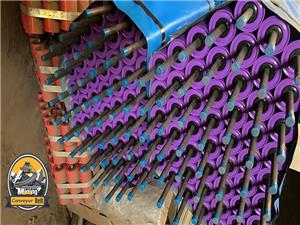
Conveyor Belt Tracking Guide: Fix Belt Misalignment in Mining Operations
Conveyor Belt Tracking Guide: Fix Belt Misalignment in Mining Operations
Anyone who has worked with belt conveyor systems knows that belt misalignment is one of the most persistent operational headaches. At the mild end, it causes material spillage and accelerated wear; at the severe end, it leads to belt edge damage, unplanned downtime, and genuine safety hazards. What makes it particularly frustrating is that misalignment often returns even after adjustment — you fix one side, and the belt drifts to the other.
The good news is that experienced field technicians follow a systematic approach that makes belt tracking predictable and manageable. This guide distills practical, field-tested methods for diagnosing and correcting conveyor belt misalignment in mining and heavy industrial environments.
The Three Diagnostic Rules
All belt misalignment stems from one root cause: uneven force distribution across the belt width. Three simple diagnostic rules help identify the direction of drift at a glance:
The belt tracks toward the tighter side. Higher tension on one side pulls the belt in that direction.
The belt tracks toward the higher side. If a conveyor belt roller or pulley sits higher on one side, the belt will climb toward it.
The belt follows the trailing direction of misaligned idlers. When a conveyor belt roller is skewed, the belt tracks toward the side the roller is pointing away from.
Memorizing these three rules turns belt tracking diagnosis from guesswork into a logical process.
Four High-Risk Misalignment Zones
Different sections of a belt conveyor system exhibit different misalignment patterns, each with distinct root causes.
Head and Tail Pulley Zones: Misalignment here typically indicates pulley buildup, uneven pulley mounting, or distorted bearing housings. Material caking on pulley surfaces creates uneven diameters that inevitably steer the belt off center.
Mid-Span Conveyor Belt Roller Sections: A seized idler, corroded idler frame, or foundation settlement in the middle run is the usual culprit. Even one non-rotating conveyor belt roller can create enough asymmetric drag to pull the belt sideways.
Loading and Transfer Points: This is the single most common trigger of belt misalignment in the field. Off-center material loading creates unilateral impact forces that push the belt laterally. The belt may track perfectly when running empty, only to drift as soon as material hits the loading zone.
Belt Splice Locations: A splice cut at an angle — or joined without perfect perpendicularity to the belt centerline — creates unequal belt edge lengths. This causes a rhythmic, repeating drift every time the splice passes through a given point.
Practical Adjustment Methods
Fixing Loading Point Misalignment
If the belt tracks true when empty but drifts under load, the problem originates at the feed point. Address it by:
Installing a deflector plate or guide chute to center the material stream precisely on the belt centerline
Replacing worn chute liners — liner wear alters material trajectory and shifts the impact point
Cleaning material buildup from pulleys and idlers regularly — wet fines and mineral dust accumulate into uneven patches that act like bumps, steering the belt off course
Correcting Head and Tail Pulley Misalignment
The adjustment rule for pulleys is straightforward: the belt tracks toward the side you tighten. If the belt drifts to the right, tighten the right-side tensioning screw and consider slightly loosening the left. Never turn the adjustment screw multiple rotations at once — small, incremental adjustments produce predictable results.
For the head drive pulley, verify that it is level and exactly perpendicular to the belt centerline. If the pulley lagging has worn unevenly — thicker on one side than the other — replacement is the only effective fix. A properly functioning belt cleaner at the head pulley is also essential: it scrapes the pulley surface clean, preventing material accumulation that creates diameter differentials.
Adjusting Mid-Span Conveyor Belt Rollers
Mid-span misalignment is the most frequent issue encountered during routine inspection, and it rarely requires disassembly. The core adjustment technique is as follows:
The belt tracks toward whichever side the idler points. If the belt drifts to the right, shift the right-side conveyor belt roller forward by 3° to 5° in the direction of belt travel — or shift the opposite-side roller backward. This creates an axial thrust component that gently guides the belt back to center.
Self-aligning idlers handle this automatically and need only periodic inspection to confirm they are functioning. For manual idler frames, the key is small, deliberate angle adjustments rather than aggressive repositioning.
Basic fault resolution: if a conveyor belt roller is seized, squealing, or worn through, replace it immediately. If the idler frame is deformed or the foundation has settled, structural reinforcement is required.
Addressing Splice-Related Misalignment
When a vulcanized splice or mechanical belt fastener is cut at an angle, the two belt edges have slightly different circumferences. This produces persistent, cyclical misalignment. A temporary mitigation is to fine-tune the two or three idler sets before and after the splice. The permanent solution is to re-cut the belt so the cut line is exactly perpendicular to the belt centerline, then rejoin the ends.
Four Common Mistakes to Avoid
Misalignment repairs often fail because technicians fall into these traps:
Over-tensioning a slack belt. Excessive tension stretches one side more than the other, making correct alignment impossible while accelerating belt fatigue and edge cracking.
Making large adjustments in one pass. Aggressive changes send the belt careening to the opposite side, triggering a frustrating cycle of back-and-forth corrections.
Adjusting hardware without cleaning material buildup. Ignoring caked material on pulleys and conveyor belt rollers means drift returns almost immediately after adjustment.
Persisting with a worn-out belt. If the belt edges are frayed with different hardness levels on each side, no amount of adjustment will make it track straight. Replacement is the more practical solution.
Preventive Maintenance: Four Daily Habits
Consistent preventive maintenance eliminates roughly 80% of belt tracking issues:
Clean pulleys and conveyor belt rollers every shift. Material accumulation is the number one cause of recurring misalignment.
Inspect roller rotation daily. Replace any seized or non-rotating conveyor belt roller immediately — a single locked idler can derail an entire tracking setup.
Check frame and pulley level monthly. Do not wait for visible misalignment to appear.
Monitor belt splice condition and overall belt wear on a regular schedule. Early detection allows planned replacement rather than emergency shutdowns.
Final Notes
Belt misalignment may appear to be a minor issue, but in reality it directly affects production continuity, workplace safety, and equipment service life. Do not wait until the belt fails to take action. Understand why the belt is drifting, learn how to adjust it correctly, and establish a disciplined maintenance routine.
And a critical safety reminder for all mining operations: never touch a moving belt or attempt to pry a conveyor belt roller while the system is running. All adjustments and inspections must be performed with the conveyor fully stopped and locked out.