Corrugated Sidewall Conveyor Belt: Steep Incline Guide
Moving bulk material up a slope is one of the most challenging jobs a conveyor belt can face. In mining, aggregate, cement, coal, and chemical plants, standard flat belts and chevron belts start to lose their grip once the incline passes roughly 15 degrees. Granular material slides backward, fine powder drifts into the air as dust, and piles of material spill over the edges. To cope, operators traditionally split the climb into several short stages, each with its own conveyor and transfer point. The result is a sprawling layout, heavy civil works, dusty transfer chutes, and a chain of machines that all need maintenance.
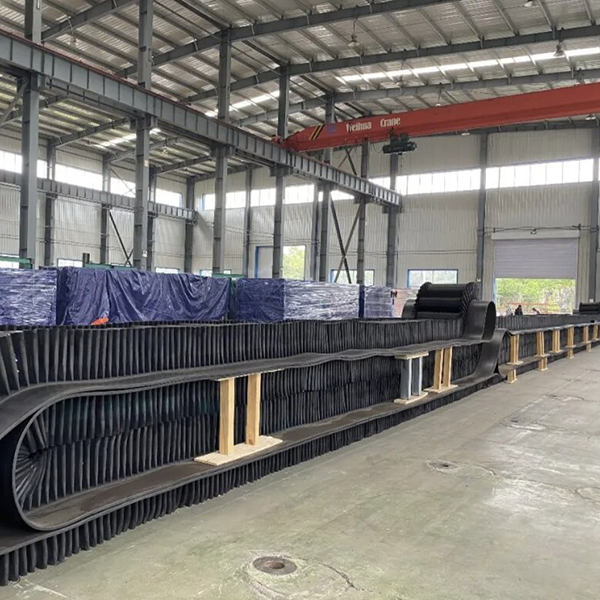
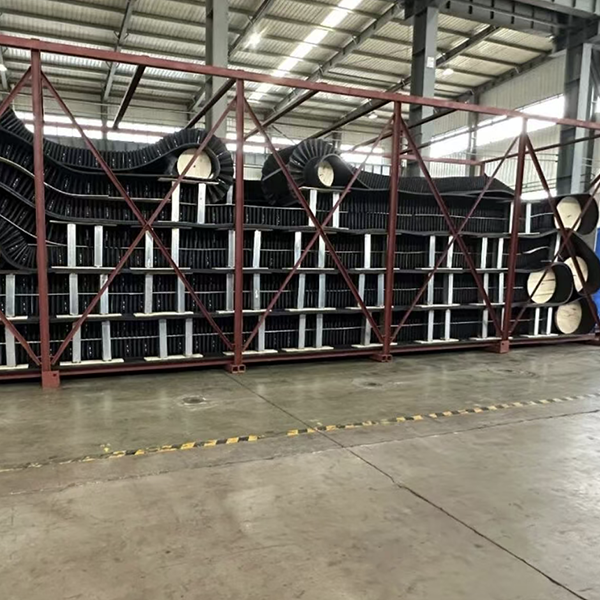
A corrugated sidewall conveyor belt — also known as a skirt conveyor belt or a steep incline conveyor belt — was designed specifically to eliminate this problem. Its one-piece construction of a base belt, corrugated sidewalls, and transverse cleats forms an independent, enclosed pocket that carries material from 0° all the way to 90° without rollback or spillage. This article explains why steep inclines demand a sidewall belt, how the manufacturing process decides belt quality, and how the right design cuts costs and raises throughput.
Why Steep Incline Applications Need a Sidewall Belt
The limits of a standard conveyor belt
Once the conveyor angle exceeds roughly 15°, a plain rubber belt faces four common failures:
Fine powder slides back down the belt and generates heavy dust at the tail
Coarse aggregate loses traction, slides, piles up, and spills over the edges
High vertical lift at a shallow angle forces a very long belt, which lowers efficiency and increases wear
Operators add transfer conveyors to reach the top, multiplying equipment investment and floor space
None of these is a maintenance problem — they are design limitations. A standard belt simply does not have enough friction or containment to hold material on a steep slope.
How a sidewall belt solves it
A corrugated sidewall conveyor belt combines three elements into one structure:
Base belt — the load-carrying carcass that transmits the drive force
Corrugated sidewalls — flexible rubber walls on both edges that contain the load
Transverse cleats — cross ribs that divide the belt into individual enclosed pockets
Because each pocket is fully enclosed by the cleats and the sidewalls, material cannot slide back or spill sideways. This is what makes 0–90° continuous climbing possible with a single belt, with no bucket elevator and no staged transfer points.
One-Piece Vulcanized Construction: Why Manufacturing Quality Matters
Not all sidewall belts are built the same. The single biggest quality differentiator is how the sidewalls and cleats are attached to the base belt.
The problem with bonded (secondary adhesive) belts
Cheap sidewall belts rely on a secondary bonding process: the sidewalls and cleats are glued onto the base belt after the belt is cured. Under continuous tension, vibration, and impact, that glued joint is the first thing to fail. Common failures include:
Sidewalls cracking or peeling away from the base belt
Cleats detaching and being pulled into the transfer point
Material leaking between the wall and the base, which accelerates internal damage
One-piece high-temperature vulcanization
A quality corrugated sidewall conveyor belt is cured as a single integrated unit at high temperature. During vulcanization, the sidewalls, cleats, and base belt merge into one homogeneous rubber body:
No glued seam to separate — the whole belt resists tearing and impact as one piece
No bubbling or delamination under heavy load
Cleats stay firmly attached even on long, loaded uphill runs
Good sealing means fine powder, granules, and small ore chunks all stay inside the pocket
Smooth, low-resistance running with less belt wander, which also protects the conveyor belt rollers
The result is a belt that behaves like a single product rather than a sandwich of parts. For buyers, this difference shows up as longer service life and far lower maintenance cost.
Key Benefits: Lower Cost, Higher Throughput
1. Ultra-steep angles shrink the footprint
A corrugated sidewall conveyor belt climbs at any angle from 0° to 90°. For the same lift height, the conveyor length is often cut by more than half compared with a shallow-angle flat belt. That directly reduces the cost of the support structure, the walkways, and the building or corridor around it.
2. Zero spillage means zero product loss
Because the load travels in separate enclosed pockets, powder stays contained (less airborne dust), and coarse material cannot slide off. The line stays clean and dry, which also makes it easier to satisfy environmental and housekeeping requirements.
3. One belt replaces several transfer conveyors
A single sidewall belt can handle vertical lift, steep incline, and horizontal feed in one run. Removing transfer chutes removes their dust, their impact wear, and their maintenance points. Fewer machines means a more reliable, easier-to-operate line.
4. A heavy-duty carcass built for rough duty
Quality sidewall belts use a high-strength EP or NN carcass in the base belt. This provides the impact resistance and abrasion resistance needed for high-wear materials such as sand and gravel, ore, run-of-mine coal, and cement clinker. Combined with the right cover compound, the belt survives continuous abrasion instead of wearing through quickly.
Common Applications and Industries
A steep incline conveyor belt is the natural choice whenever space is tight and material must climb:
Mining and aggregate plants — steep feed ramps and high-level stockpile discharge
Cement and coke plants — hot granules and clinker on inclined lines
Coal and coal gangue handling — large-angle surface lifting above ground
Chemical, desulfurization, and salt fields — powder and corrosive materials carried in sealed pockets
Grain, construction waste, and port bulk handling — high-lift loading applications
In each of these, the sidewall belt does what a standard belt cannot: it carries material uphill without a long shallow ramp or a chain of transfer points.
Customization: Every Site Is Different
No two plants have the same geometry, so the belt must be sized to the job. A corrugated sidewall conveyor belt can be customized to match site conditions:
Belt width — from 500 mm up to 2,400 mm to match the required capacity
Cleat height and spacing — adjusted to the material size and lump shape
Special rubber compounds — abrasion-resistant, heat-resistant, cold-resistant, acid- and alkali-resistant, and flame-retardant grades for aggressive environments
Choosing the right carcass, cleat profile, and compound up front prevents the two most expensive problems later: premature belt failure and unnecessary downtime.
Conclusion
A corrugated sidewall conveyor belt is not only a fix for uphill spillage. It is a way to save floor space, reduce equipment, cut material loss, and raise throughput. The key is buying a belt manufactured as a single vulcanized unit with a carcass strong enough for the duty. Xiamen Mining Conveyor Belt manufactures one-piece molded corrugated sidewall and skirt conveyor belts with mature, crack-free, peel-resistant construction, and supports custom designs from your drawings. Whether you are retrofitting an existing climb, replacing a worn belt, or equipping a new project, the right steep incline conveyor belt starts with the right partner.