Conveyor Belt Selection: Heat, Cold and Acid-Resistant Types
Many companies replace a conveyor belt long before its expected life — not because the belt is bad, but because the rubber compound was never matched to the working environment. A standard conveyor belt is designed for room-temperature, dry, non-corrosive materials. Put it into a hot process, a freezing outdoor yard, or an acid-laden plant, and it can fail within months. Heat cracks the cover, cold turns the rubber brittle, and chemicals make it swell and delaminate.
For the three special belts most commonly used in mining and industry — heat-resistant, cold-resistant, and acid-alkali-resistant conveyor belts — this guide explains what each one is for, which conditions it handles, and how to avoid the selection mistakes that shorten belt life.
Why Belt Material Must Match the Working Environment
A conveyor belt is a rubber product, and every rubber compound has its limits. Three environmental factors destroy a mismatched belt faster than any mechanical wear:
Heat — softens the cover, accelerates aging, and causes cracking and surface peeling
Cold — hardens the rubber so it cracks, fractures, and chips at the edges
Chemicals — make the compound swell, foam, soften, and separate into layers
When the belt compound matches the duty, the belt delivers its full design life. When it does not, the cost shows up as unplanned downtime, lost production, and frequent replacement.
Heat-Resistant Conveyor Belts
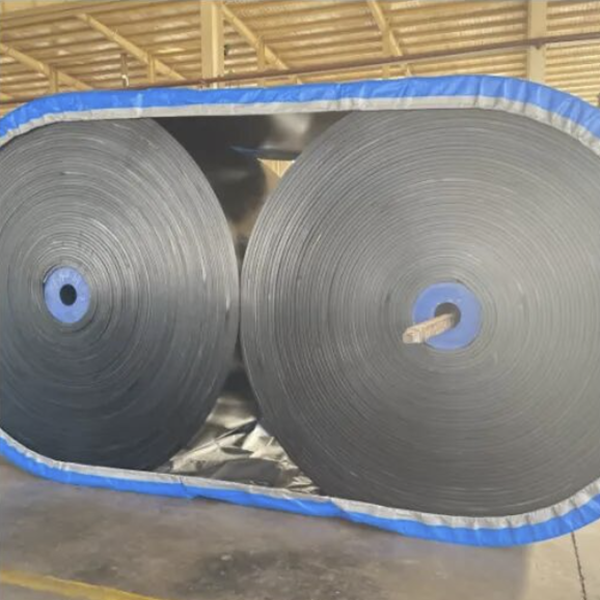
Where it is used. Cement plant clinker, coke, furnace slag, hot ore, metallurgical hot material, and any high-temperature discharge point. These are jobs where the material itself is hot enough to cook a standard belt.
How it performs. A heat-resistant conveyor belt uses a special high-temperature rubber compound that resists softening, blistering, cracking, and delamination. It keeps its strength even after prolonged exposure to radiant heat, so the cover stays intact instead of turning hard and brittle.
Temperature grades (industry standard):
T1 type — up to 100°C, for ordinary hot powders
T2 type — up to 125°C, for cement clinker and regular hot materials
T3 type — up to 150°C, for coke and high-temperature slag in demanding duty
What it is not for. Acid, alkali, and oil-contaminated applications. Heat resistance does not equal chemical resistance — pairing the wrong special belt with the wrong environment still fails early.
Cold-Resistant Conveyor Belts
Where it is used. Outdoor conveyors in northern winters, high-altitude mining areas, open-pit operations, and any site that runs below freezing all year round.
How it performs. A cold-resistant belt uses a low-temperature compound that stays flexible below zero. A standard belt hardens at around -5°C, becoming stiff enough to crack, fold, and shed edge chunks. A cold-resistant belt keeps its resilience and impact resistance through the winter.
Cold-resistance grades:
-20°C — standard cold resistance for most outdoor winter duty
-40°C — deep cold resistance for northeast China, Inner Mongolia, and extreme high-altitude mining sites
What it is not for. Hot materials and strongly corrosive environments. A cold-resistant compound is engineered for low temperature, not for heat or chemical attack.
Acid and Alkali-Resistant Conveyor Belts
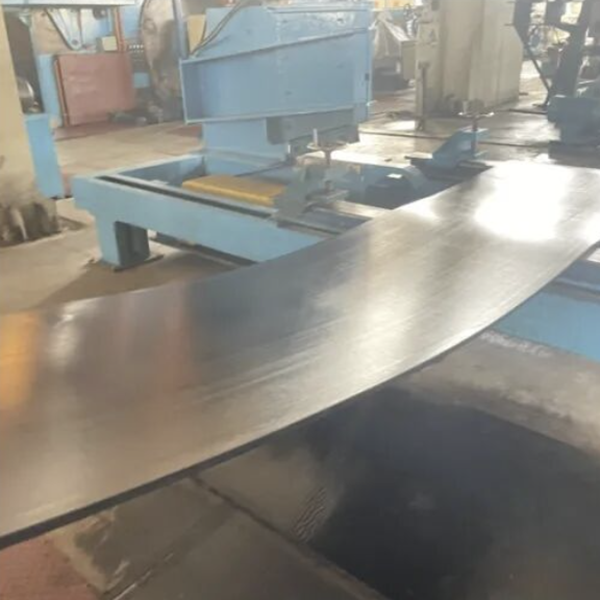
Where it is used. Chemical plants, phosphate fertilizer plants, salt fields, desulfurization gypsum handling, corrosive powders, and damp areas with acid or alkali wastewater.
How it performs. The rubber cover is formulated to resist chemical attack — it does not swell, foam, or separate, so the belt avoids the edge rot, surface peeling, and perforation that destroy ordinary belts in corrosive service. In harsh chemical environments, a dedicated acid-alkali-resistant belt can last more than three times longer than a standard belt.
What it is not for. Glowing hot materials. Corrosion resistance and heat resistance are different capabilities, and a chemical-duty belt is not designed for thermal loads.
Quick Selection Reference
| Condition | Recommended belt type |
|---|---|
| Hot powder / clinker / slag (100–150°C) | Heat-resistant (T1 / T2 / T3) |
| Freezing outdoor / high-altitude mining (-20 to -40°C) | Cold-resistant |
| Acid / alkali / salt / damp chemical duty | Acid-alkali-resistant |
| Room temperature, dry, abrasive bulk | Standard abrasion-resistant belt |
| Oil and grease exposure | Oil-resistant belt |
When in doubt, base the decision on the highest temperature, the worst chemical, and the abrasiveness the belt will actually see — not on the nameplate of the machine.
Common Selection Mistakes
Almost every premature belt failure we see traces back to one of these four mistakes:
Using a standard belt on a hot application — the cover hardens, cracks, and peels, and the belt is scrapped in about three months.
Using a standard belt in a northern winter — the rubber stiffens, folds, and loses edge chunks in freezing conditions.
Using a standard belt in a chemical environment — the compound foams, delaminates, and rots away.
Mixing up special belts — heat-resistant belts are not chemical-resistant, and acid-resistant belts are not heat-resistant. A mismatched special belt dies just as fast as a standard one.
Conclusion
Choosing the right special conveyor belt is one of the cheapest ways to extend belt life and cut the cost of downtime, repairs, and replacement. Match the rubber compound to the temperature, the chemical exposure, and the abrasiveness of the material, and the belt will do its job for years. Xiamen Mining Conveyor Belt matches heat-resistant, cold-resistant, acid-alkali-resistant, abrasion-resistant, and flame-retardant conveyor belt grades to your site temperature, material characteristics, and working conditions — free of charge — and supports custom production. Whether you are selecting, replacing, or customizing a belt, send us your operating conditions and we will recommend the right grade.