5 Critical Belt Conveyor Challenges and Modern Engineering Solutions for Mining
5 Critical Belt Conveyor Challenges and Modern Engineering Solutions for Mining
Mine operators know the reality: a belt conveyor that runs smoothly is a profit center; one that fails unpredictably is a liability. The difference lies not in any single component but in how systematically the system's most common failure modes are engineered out. This article examines five persistent challenges in mining conveyor belt systems and the modern engineering approaches that solve them at the root cause.
Challenge 1: Belt Misalignment — The 80% Problem
Belt misalignment is the single most frequently cited cause of conveyor downtime across the mining industry. When the belt runs off-center, the consequences cascade rapidly: edge wear accelerates, material spills onto walkways and return idlers, and in severe cases the belt can tear or roll over completely.
Modern Solution: Multi-Layer Alignment Control
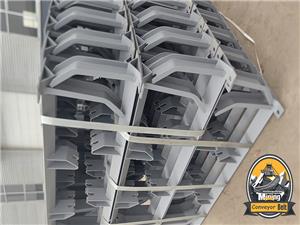
A single self-aligning idler is no longer sufficient for demanding mining applications. The current best practice combines three layers of defense: precision-engineered self-aligning idler frames with patented tracking geometry; laser-based online alignment monitoring that detects drift in real time; and automated correction actuators that respond without human intervention. When deployed together, this multi-layer approach can reduce misalignment-related downtime by over 90%, eliminating one of the largest sources of maintenance cost and production loss.
Challenge 2: Conveyor Belt Roller Failure — The Silent Profit Killer
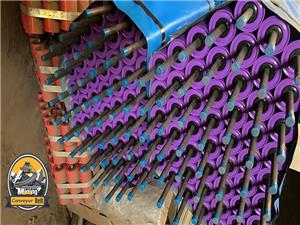
Standard conveyor belt rollers in continuous mining service typically reach their failure threshold at around 2,000 operating hours, with a seizure rate approaching 15%. A single seized roller drags against the belt, creating concentrated friction that rapidly erodes the cover rubber and increases motor power draw across the entire system.
Modern Solution: Triple-Seal, Premium-Bearing Rollers
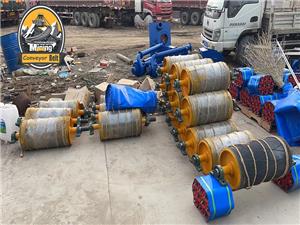
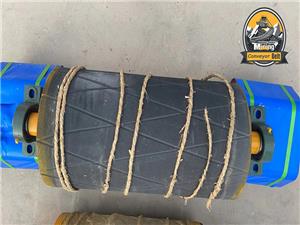
The upgrade path is clear: triple-labyrinth sealing systems that exclude dust and moisture throughout the roller's service life; high-carbon chromium steel bearings rated for continuous high-speed operation; and hot-dip galvanized roller shells and brackets that resist corrosion even in wet or chemically aggressive environments. Field data from large-scale mining operations shows these rollers achieving over 5,000 hours of service with a seizure rate below 3% — a 2.5x improvement in service life that translates directly into reduced replacement labor, fewer unplanned stoppages, and lower belt wear.
Challenge 3: Belt Splice Failure — The Weakest Link
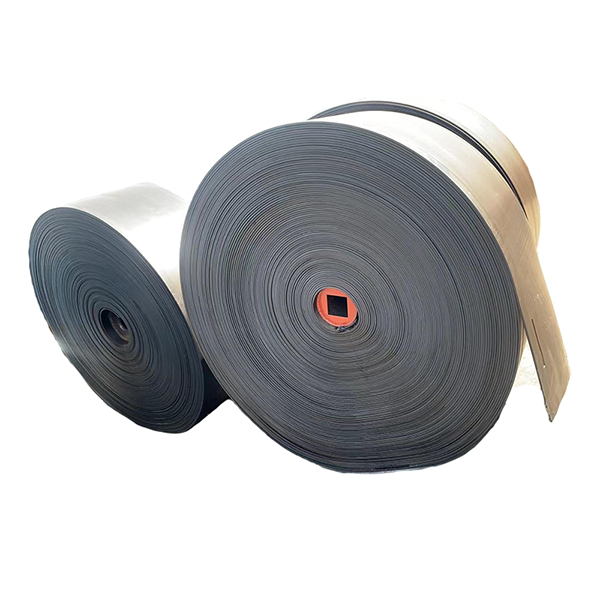
Mechanical belt fasteners are quick to install but fundamentally limited in strength. A typical mechanical splice achieves only around 60% of the parent belt's tensile strength. Under the high tensions of long-distance mining conveyors, this margin is dangerously thin. Splice failure not only stops production but often damages the belt ends, making re-splicing more difficult.
Modern Solution: Full Vulcanized Splicing
Hot vulcanization creates a continuous molecular bond across the splice joint, achieving a strength rating of 95% or more of the original belt body. A properly executed vulcanized splice on a correctly specified conveyor belt can run for years without failure. In demanding port and mining applications where belt replacements cost tens of thousands in downtime alone, the additional upfront investment in vulcanized splicing pays back many times over across the belt's service life.
Challenge 4: Drive System Inefficiency
Conventional asynchronous motor drives consume excessive energy during startup — when the inrush current spikes — and operate at suboptimal efficiency under partial-load conditions. The mechanical shock of direct-on-line starting also stresses the belt, the conveyor belt rollers, and the drive couplings, shortening the life of every component in the power train.
Modern Solution: Permanent Magnet Direct-Drive with VFD Control
Replacing the asynchronous motor and gearbox combination with a permanent magnet synchronous direct-drive motor eliminates the gearbox entirely — removing a major source of mechanical loss, noise, and maintenance. When paired with a variable frequency drive, the system achieves soft-start capability that eliminates startup shock while maintaining full torque. Energy savings of 15% to 20% are routinely measured in field installations, and the reduction in mechanical stress extends the life of the entire belt conveyor system.
Challenge 5: Dust Emissions and Return-Side Carryback
Material that adheres to the return side of the belt creates two problems: it drops along the conveyor path, accumulating into piles that must be manually cleaned, and it generates airborne dust that poses respiratory health risks and — in underground coal operations — explosion hazards.
Modern Solution: Integrated Dust and Carryback Control
A closed-loop approach combines three technologies: a fully enclosed belt cleaner system at the head pulley that scrapes the belt clean before the return run; atomized water mist suppression at transfer points; and sealed loading chutes that contain dust at the source. When properly engineered, this integrated system can reduce fugitive dust emissions by 70% or more, keeping the conveyor line clean, compliant with environmental regulations, and safer for personnel.
The Smart Upgrade: AI-Driven Conveyor Monitoring
Beyond component-level improvements, the mining industry is now entering an era of AI-enabled predictive maintenance for belt conveyor systems. Three technologies define this shift:
AI Vision Monitoring: Industrial cameras deployed at critical points along the conveyor use computer vision algorithms to detect belt misalignment, surface tears, and foreign object entrapment in real time, with response latency under 200 milliseconds.
Predictive Maintenance Platform: Vibration, temperature, and current sensors feed data into machine learning models that can forecast bearing wear and motor overload conditions 7 to 15 days in advance, reducing unplanned failure rates to a fraction of the industry average.
Remote Operations Center: With 4G, 5G, or fiber connectivity, operators can monitor equipment status, energy consumption patterns, and maintenance alerts from any location, enabling genuinely unattended operation with full situational awareness.
Mining operations that have deployed these smart monitoring systems report reductions in unplanned downtime from over 100 hours annually to single-digit figures — an outcome that goes directly to the bottom line.
From Piecemeal Fixes to System-Level Reliability
Each of these five challenges, addressed in isolation, yields incremental improvement. Addressed together as part of a system-level engineering approach — with premium conveyor belt rollers, vulcanized splicing, intelligent drives, integrated dust control, and AI-powered monitoring — the result is a belt conveyor that shifts from being the operation's most frequent source of downtime to its most reliable asset.
At Xiamen Mining Conveyor Belt, we bring this system-level philosophy to every project. Our conveyor belts, conveyor belt rollers, and drum systems are manufactured under ISO9001-certified quality management, with a focus on delivering the durability and performance that modern mining demands.