Long-Distance Mining Conveyor Belt Design: Key Principles and Engineering Best Practices
Long-distance belt conveyor systems are the backbone of modern mining operations, transporting bulk materials across challenging terrains that span tens of kilometers. Unlike conventional short-range conveyors, long-distance mining conveyor belts must contend with high power demands, complex route curves, significant belt wear, and undulating terrain profiles. Designing such a system requires careful optimization across multiple engineering disciplines to ensure reliability, longevity, and cost efficiency.
Core Design Principles
When engineering a long-distance conveyor belt system, two guiding priorities shape every decision: maximizing equipment reliability and minimizing total project cost. Beyond these fundamentals, designers must account for terrain conditions, installation feasibility, accessibility for maintenance, power and water supply logistics, and civil engineering requirements.
The optimal route for a long-distance conveyor belt typically follows gentle valley terrain, deliberately avoiding villages, existing structures, steep mountains, waterways, and geologically unstable zones. Minimizing farmland occupation and preserving the local ecological environment are equally critical considerations. Most sections of the conveyor system are elevated on steel truss trestles, allowing the conveyor to span valleys, highways, rivers, and other infrastructure. The clearance height meets national regulatory standards so that existing facilities and road traffic remain unaffected. To protect both the conveyed material and the surrounding environment, the entire conveyor line is enclosed with color-coated steel panels, enabling fully sealed transport that shields operations from rain, wind, and snow while eliminating dust and noise pollution.
Key Engineering Design Factors
Buffer Loading Zones: Protecting the Belt from Impact Damage
Extending the service life of a long-distance conveyor belt begins with minimizing impact and abrasion at loading points. Material receiving zones endure substantial impact forces, so effective design must reduce drop height and deploy properly engineered buffer systems.
The most advanced solution currently available is an integrated buffer receiving device that combines the advantages of buffer idlers and impact beds. Conventional buffer idlers are spaced approximately 400 mm apart, leaving the belt unsupported between idlers. When large, sharp-edged material — or foreign objects such as iron bars and liner plates — strikes the belt in these unsupported gaps, the belt can be punctured or sliced. For steel wire conveyor belts, such damage can be catastrophic: if left unaddressed, a single cut can propagate and split an entire belt into two halves.
The solution integrates rigid support plates between each buffer idler. Under normal operation, the belt does not contact these plates. However, when heavy or sharp material impacts the belt, the belt deflects and makes contact with the rigid plate, which absorbs and rebounds the impact force, preventing penetration and laceration.
Steel Wire Conveyor Belt Selection and Pipe Belt Transitioning
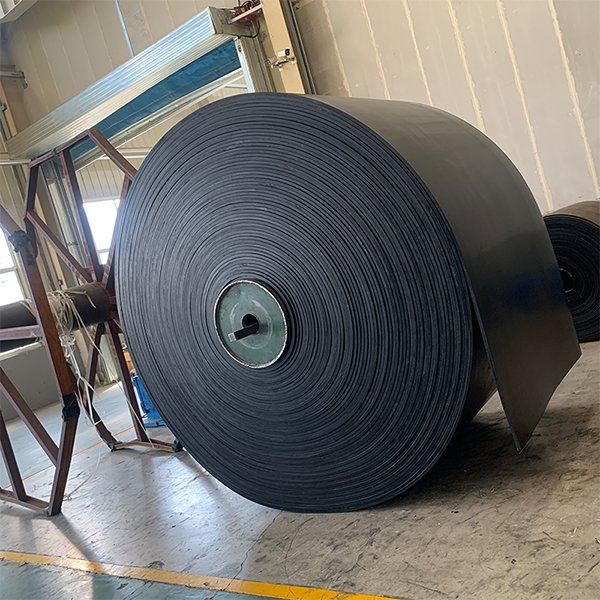
For long-distance high-tension applications, steel wire conveyor belts are the preferred choice due to their exceptional tensile strength and low elongation characteristics. When a tubular (pipe) belt configuration is required, the transition from a flat belt profile to a closed circular tube must follow a gradual progression. The length of the transition zone is primarily determined by the allowable elongation of the belt and the requirement that material be progressively enclosed within the tube.
As the belt transitions from flat to tubular, the belt edges undergo significant additional strain. The transition length is typically set at 25 times the pipe diameter. This gradual forming process prevents excessive edge stress that could compromise belt integrity and ensures stable material containment.
Effective Belt Cleaning Systems
A clean conveyor belt is a longer-lasting conveyor belt. For belt conveyor systems, several cleaning device types are available: scraper-type cleaners, roller-type cleaners, brush-type cleaners, vibratory cleaners, and water-spray/squeegee systems. The selection depends on the specific material characteristics and operating conditions. In long-distance mining conveyor belt applications, combination cleaning systems that deploy multiple cleaning stages deliver the most thorough results.
Belt Turnover: Protecting the Return Side
Belt turnover is a proven technique for preventing material buildup beneath the conveyor and reducing carryback adhesion to return-side idlers. The method uses guide rollers to flip the return belt 180 degrees at the discharge end, so the clean (non-carrying) side contacts the return idlers. This prevents sticky material from adhering to idlers and dropping along the conveyor path, simultaneously reducing wear on both the belt and the conveyor belt rollers.
For fabric-core belts, the turnover length ranges from 8 to 12 times the belt width. For steel wire conveyor belts, a longer turnover length of 15 to 25 times the belt width is required. Properly implemented belt turnover not only extends the service life of both the belt and conveyor belt rollers but also reduces power consumption — a meaningful contribution to the energy-saving design philosophy of modern material handling systems.
Essential Electromechanical Protection Devices
Long-distance belt conveyor systems must operate under comprehensive electromechanical protection. Key protection categories include:
Belt Misalignment Protection: Beyond deploying self-aligning idler frames and properly angled forward-tilt side idlers, a sufficient number of automatic belt tracking correction devices should be installed along the conveyor length.
Speed Monitoring: Optical encoders are the preferred choice for belt speed detection in long-distance applications. Speed protection can be implemented through tachometer-type, magnetic-induction transmitter-type, or proximity-switch-type devices.
Belt Breakage Capture: In the event of belt rupture, capture devices must engage rapidly with minimal braking time and distance. During normal operation, the capture device must not abrade the belt, generate additional resistance, or reduce throughput. The most widely used types are wedge-type and roller-type capture devices.
Metal Debris Detection and Removal: Metal detectors paired with belt-type or suspended electromagnetic separators protect the conveyor belt from foreign object damage.
Longitudinal Tear Protection: Tear detection systems monitor either external belt surface changes or internal belt state changes. Early detection of longitudinal ripping is essential for preventing catastrophic belt failure in steel wire conveyor belt installations.
Curved Route Design: Adapting to Terrain
Long-distance mining conveyor belt routes inevitably require horizontal curves to navigate terrain and obstacles. The core of curve design lies in tension analysis and curve-implementing measures. Key considerations include:
Preliminary determination of curve radius based on actual terrain conditions
Selecting appropriate curve measures and idler frame parameters — trough angles between 25° and 55°, inner curve elevation angles under 5°, and idler tilt angles of 1° to 2° with forward-tilted side idlers for belt tracking
Tension calculations at every point along the curve section to verify curve restriction conditions
Detailed dynamic analysis to further validate curve performance
Additional protective measures to ensure reliable curve operation
Energy-Efficient Drive System Design
The drive system of a long-distance conveyor belt must satisfy daily operational demands while meeting energy-efficiency targets. Design considerations include:
High starting torque capability for loaded startups
Sufficiently low and well-controlled acceleration to minimize dynamic loads on load-bearing components
Even load distribution across multiple drive motors
Reliable overload protection during both startup and steady-state operation
Excellent controllability for managing startup and shutdown speed profiles
Where possible, staggered motor startup timing and reduced motor cycling during short stoppages
Self-monitoring and self-diagnostic controller functionality
Adoption of controlled start/stop drive technologies
The Critical Role of Conveyor Belt Rollers in Long-Distance Systems
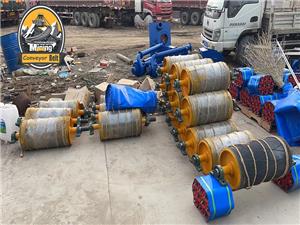
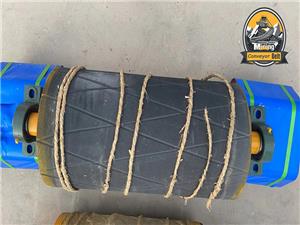
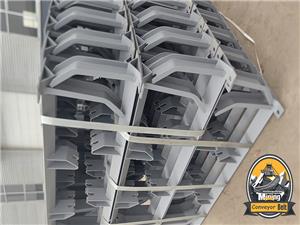
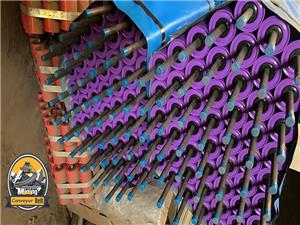
No discussion of long-distance conveyor belt design is complete without addressing conveyor belt rollers. These components carry the full weight of the belt and material across every meter of the system, making their quality, spacing, and configuration directly consequential to belt life and energy consumption. In long-distance mining applications, conveyor belt roller selection must consider load capacity, rotational resistance, sealing performance against dust and moisture, and long-term durability under continuous high-speed operation. Properly specified idler frames and conveyor belt roller arrangements in curve sections, transition zones, and loading areas are fundamental engineering decisions that determine whether a design performs as intended over decades of service.
Conclusion
Designing a long-distance mining conveyor belt is a multidisciplinary engineering challenge that demands meticulous attention to every component — from the belt itself to the conveyor belt rollers, drive systems, protection devices, and structural supports. By applying sound design principles and carefully addressing each engineering factor detailed above, operators can build belt conveyor systems that deliver reliable, efficient, and environmentally responsible material transport for the life of the mine.